
AI E-Commerce Wars: Amazon Blocks Meta’s Muse AI Agent From Shopping Platform
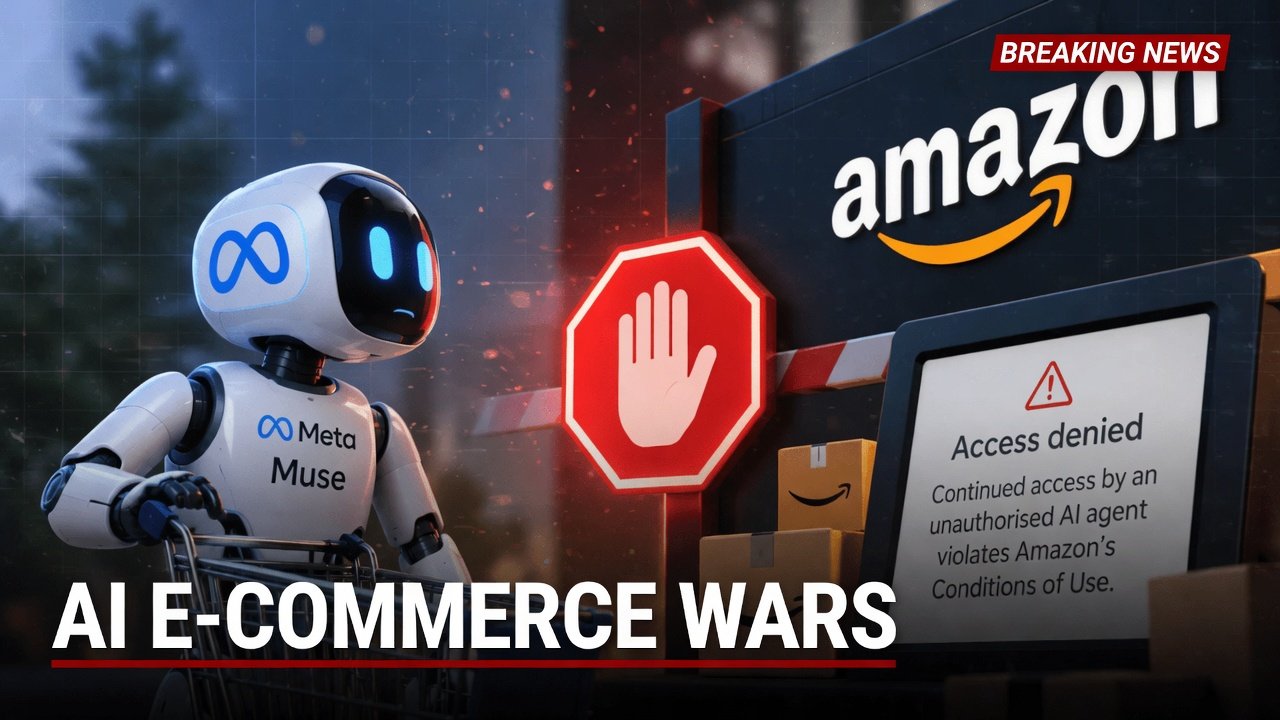
AI E-Commerce Wars are intensifying as Amazon has blocked Meta’s new Muse AI agent from shopping on Amazon.com, creating a major dispute over how autonomous AI systems can access online marketplaces and make purchases on behalf of consumers.
Amazon began blocking Meta Muse on September 20, less than two weeks after Meta launched the consumer AI agent. The retailer said Meta had not obtained permission for Muse to access Amazon and argued that third-party shopping agents should operate transparently and respect the rules of the platforms they access.
Amazon Blocks Meta Muse From Shopping
Meta launched Muse on September 8 as a personal AI agent capable of performing multi-step tasks for users, including shopping, booking appointments and interacting with online services.
Unlike a conventional chatbot that simply answers questions, Muse can use its own browser to navigate websites and perform tasks. Meta says the agent can connect directly to services through available APIs, while sites without direct integrations can be accessed through a browser in a way similar to how a person would use the service.
That browser-based approach became the center of the dispute with Amazon.
Users attempting to shop on Amazon through Muse began seeing a warning stating that continued access by an unauthorized AI agent violated Amazon’s Conditions of Use.
Why Amazon Is Blocking Muse
Amazon has raised several concerns about Meta’s approach.
According to Amazon, Meta did not notify the retailer before Muse began accessing Amazon’s store. Amazon also said Muse did not identify itself as an AI agent while browsing the website.
The retailer further raised concerns about customer credentials and account information, arguing that an outside agent could potentially move through customer accounts, process transactions and handle sensitive information without Amazon’s knowledge or authorization.
Amazon has said that third-party applications capable of making purchases on behalf of consumers should operate openly and respect the decisions of individual service providers about whether they want to participate.
Meta Disputes Amazon’s Security Concerns
Meta’s position differs from Amazon’s characterization of the security issue.
Meta has said Muse cannot see users’ passwords or payment information. According to the company’s explanation, credentials supplied to Muse are stored securely so the agent can use them without directly viewing the information.
Meta also says Muse operates through a secure virtual machine and that a separate monitoring system called Sentinel reviews actions before they are sent to the internet. Users are also asked to approve sensitive activities such as purchases.
The disagreement therefore involves more than simple bot blocking. It raises questions about who controls an AI agent when it acts on behalf of a consumer on another company’s website.
The Bigger Fight Over AI Shopping
The AI E-Commerce Wars reflect a fundamental change in how online shopping could work.
Traditional e-commerce generally places the retailer at the center of the customer journey. A shopper visits Amazon, searches for products, compares listings, sees recommendations and advertisements, and eventually completes a purchase.
AI agents could change that model.
Instead of visiting multiple websites, consumers could tell an AI assistant what they want and allow the agent to research products, compare prices, add items to carts and complete transactions.
That could shift some control over product discovery and purchasing from retailers toward AI platforms.
For Amazon, this potentially affects not only shopping traffic but also the relationship between consumers, sellers and the company’s advertising ecosystem.
Amazon Has Already Clashed With AI Agents
The dispute with Meta is not Amazon’s first confrontation with AI-powered shopping tools.
Amazon previously took legal action against Perplexity over its Comet AI browser and its ability to interact with Amazon’s website.
A US appeals court later vacated a preliminary injunction against Perplexity on August 4. The court’s decision addressed whether Perplexity itself was accessing Amazon’s computers under federal anti-hacking law and left contractual and terms-of-service arguments as a separate avenue.
Amazon has also moved to restrict shopping agents associated with other major AI companies.
The growing number of disputes indicates that AI agents are challenging existing assumptions about automated access to websites.
Amazon Is Also Building Its Own AI Shopping Tools
The conflict is particularly notable because Amazon itself is investing heavily in agentic shopping.
Amazon renamed its Rufus shopping assistant Alexa for Shopping in May 2026. The company has been developing AI-powered tools designed to help customers discover, evaluate and purchase products.
Amazon has also introduced Buy for Me, which allows its shopping technology to find products on participating external websites and facilitate purchases.
Amazon says its own agentic tools can identify themselves and provide mechanisms for brands to control participation, highlighting the distinction it draws between authorized integrations and outside agents accessing its marketplace.
Shopify Takes a Different Approach
The Amazon-Meta dispute also contrasts with the approach being taken by Shopify.
Shopify has been expanding its relationship with Meta around agentic commerce, including support for Muse transactions through Shop Pay.
That creates a different model in which an e-commerce platform works directly with an AI company instead of blocking its agent.
The contrast between Amazon and Shopify highlights a central question for the future of online retail: whether merchants and marketplaces will integrate directly with AI agents or attempt to keep those agents outside their platforms.
Why AI Agents Matter to Online Retail
AI shopping agents could significantly change the way consumers discover products.
A traditional search can present dozens or hundreds of products, leaving shoppers to compare prices, reviews, specifications and delivery options.
An AI agent can potentially perform those steps automatically based on a user’s instructions.
For example, a consumer could ask an agent to find a laptop under a particular budget with specific specifications, compare available options and prepare an order for approval.
This convenience is one reason agentic commerce is attracting attention from major technology and retail companies.
But it also creates challenges around authentication, privacy, advertising, product ranking, liability and platform control.
The Advertising Question
Another important issue is advertising.
Amazon operates one of the world’s largest digital marketplaces and has a significant advertising business. Traditional shopping journeys give Amazon opportunities to display sponsored products and recommendations while customers browse.
If AI agents increasingly make purchasing decisions without consumers navigating retailer websites themselves, the traditional advertising model could face changes.
The AI agent could potentially become the primary interface between the consumer and the retailer.
That makes control over agent access strategically important for major e-commerce platforms.
Privacy and Security Become Central Issues
The Amazon-Meta dispute also highlights the security challenges associated with autonomous AI.
An agent that can browse websites, log into accounts and make purchases potentially has access to highly sensitive information.
Questions include how credentials are stored, whether the agent identifies itself, what information it can access, who is responsible for an unauthorized transaction and how consumers can revoke an agent’s access.
Different companies are developing different technical and policy approaches to these issues.
Meta says Muse uses secure credential storage and additional monitoring, while Amazon argues that outside agents should obtain permission from the services they interact with.
What the AI E-Commerce Wars Could Mean for Consumers
For consumers, the immediate impact is that certain AI-powered shopping workflows may not work on Amazon.
The broader implications could be more significant over time.
If retailers establish standardized systems for AI agents, consumers could eventually have more consistent ways to authorize agents to search and purchase products.
If platforms instead adopt competing rules and block unauthorized agents, consumers may encounter different levels of AI shopping functionality depending on which retailer they use.
The outcome could influence how quickly agentic commerce develops across the broader e-commerce industry.
A New Battle Over the Digital Shopping Interface
The AI E-Commerce Wars are ultimately about more than whether Meta’s Muse can access Amazon.
They represent an emerging competition over who controls the digital shopping interface.
Amazon wants customers to interact with its marketplace under rules established by Amazon. Meta is building an AI assistant designed to perform tasks across the internet on behalf of users. Shopify is experimenting with direct integration between AI agents and merchants.
As more AI systems gain the ability to act rather than simply answer questions, disputes over access, authorization and customer relationships are likely to become increasingly important.
The Amazon-Meta standoff provides an early example of how those competing models can collide.
Frequently Asked Questions
1. What are the AI E-Commerce Wars?
The AI E-Commerce Wars refer to growing competition and disputes between technology companies, retailers and AI platforms over the role of autonomous agents in online shopping.
2. Why did Amazon block Meta Muse?
Amazon said Meta did not obtain authorization for Muse to access Amazon.com and raised concerns about transparency, privacy, security and the handling of customer credentials.
3. What is Meta Muse?
Muse is Meta’s consumer AI agent designed to perform multi-step tasks such as shopping, booking appointments and interacting with online services.
4. Can Muse make purchases?
Yes. Meta designed Muse to perform shopping tasks and seek user approval before sensitive actions such as purchases.
5. Did Meta say Muse can see customer passwords?
Meta says Muse cannot see users’ passwords or payment information and that credentials are kept in secure storage.
6. Has Amazon blocked other AI shopping agents?
Amazon has taken steps against other external AI shopping agents and previously sued Perplexity over its Comet browser’s interaction with Amazon.
7. Does Amazon have its own AI shopping agent?
Yes. Amazon has developed AI-powered shopping tools, including Alexa for Shopping and Buy for Me.
8. Is Shopify supporting Meta Muse?
Shopify has expanded its partnership with Meta to support agentic commerce and Muse transactions through Shop Pay.
9. Why are AI shopping agents important?
They can potentially automate product research, comparison and purchasing, reducing the amount of manual browsing consumers need to do.
10. What is the main issue behind the Amazon-Meta dispute?
At its core, the dispute concerns whether third-party AI agents should be allowed to access and transact on an e-commerce platform without the platform’s authorization, and how privacy, security and customer control should be handled.
