
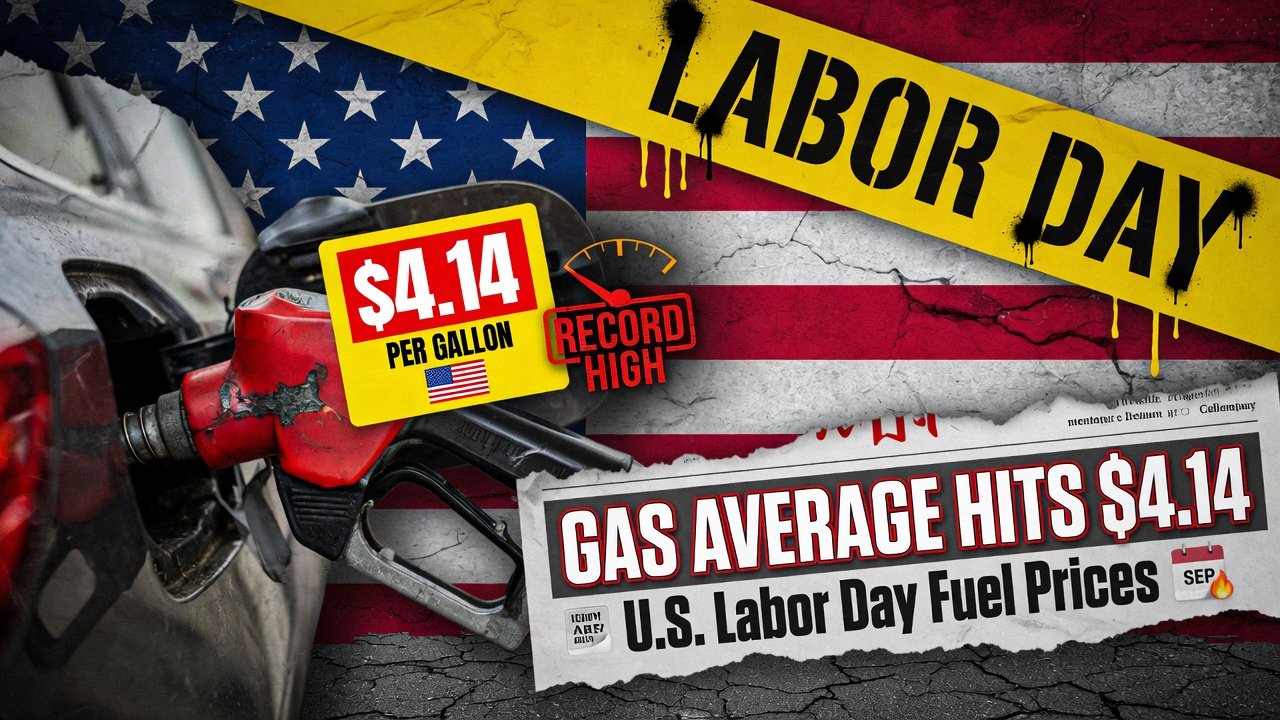
Record Labor Day Fuel Prices: U.S. Gasoline Average Hits $4.14 Per Gallon
Record Labor Day Fuel Prices have created a new milestone for American drivers, with the national average for regular gasoline reaching about $4.14 per gallon during the 2026 Labor Day weekend. The price marked the highest Labor Day level on record, surpassing the previous holiday record of $3.82 set in 2012. AAA reported that the national average was already $4.14 heading into the holiday weekend.
The increase comes at a time when global oil markets are facing significant uncertainty. Geopolitical tensions, disruptions around major oil transportation routes and pressure on refinery operations have combined to keep crude oil and refined fuel prices elevated.
Gas Prices Reach a Labor Day Record
The $4.14 national average represents an unusually expensive start to the Labor Day travel period.
AAA said the national average had never previously exceeded $4 per gallon on Labor Day. The previous record of $3.82 was established in 2012.
The latest increase is particularly notable because gasoline prices normally experience some seasonal relief around this period as summer driving demand begins to decline.
This year, however, higher crude oil costs have offset that seasonal effect.
Geopolitical Tensions Push Oil Prices Higher
One of the biggest factors behind the current fuel-price surge is continued instability in global energy markets.
AAA has pointed to volatility around the Strait of Hormuz, a critical route for international oil shipments, as a major factor keeping crude prices elevated. Crude oil prices have remained around the $90-per-barrel range amid concerns about potential disruptions to global supply.
Recent escalation in the Middle East has added further uncertainty to the energy market.
Higher crude prices generally translate into higher costs for refiners and eventually higher prices at gasoline stations.
Strait of Hormuz Remains a Key Concern
The Strait of Hormuz is one of the world’s most important energy transportation routes.
Any disruption to shipping through the waterway can create concerns about the availability of crude oil and refined petroleum products in international markets.
Recent reports indicate that shipping traffic through the Strait has slowed amid heightened regional tensions, adding to concerns about future supplies.
Even before a major physical shortage occurs, the possibility of disruption can push oil prices higher because traders factor potential supply risks into market prices.
U.S. Refineries Face Additional Pressure
Crude oil is only one part of the gasoline-price equation.
Refineries must process crude into gasoline, diesel and other petroleum products. When refinery operations face disruptions or operate under heavy pressure, the supply of finished fuel can tighten.
Recent reports have pointed to U.S. refineries operating at high capacity while dealing with extreme weather conditions and other operational challenges. These pressures have contributed to tighter fuel markets during the holiday period.
Reduced refining flexibility can make gasoline prices more sensitive to changes in crude oil costs.
Diesel Prices Also Reach Record Levels
The pressure is not limited to gasoline.
Diesel prices have also climbed sharply, with the national average reaching approximately $5.85 per gallon around the Labor Day weekend, according to reports.
Higher diesel prices can have a wider economic impact because diesel powers a significant portion of the country’s trucking, shipping, construction and agricultural industries.
When transportation costs rise, businesses may eventually pass some of those additional expenses on to consumers.
Labor Day Travelers Feel the Impact
Labor Day is traditionally one of the busiest travel periods in the United States.
Millions of Americans travel by car during the long weekend, making gasoline prices particularly important for household budgets.
With the national average above $4 per gallon, families driving long distances face significantly higher fuel expenses compared with recent years.
The higher costs could encourage some travelers to shorten road trips, combine journeys or look for cheaper fuel stations.
Gasoline Still Below Its All-Time Record
Although the current price represents a Labor Day record, it is important to distinguish it from the overall U.S. gasoline price record.
The national average for regular gasoline reached approximately $5.02 per gallon in June 2022, which remains higher than the current level.
The significance of the current increase is therefore its record level specifically for the Labor Day holiday period.
Why Crude Oil Matters So Much
Crude oil represents a major component of the final price consumers pay at gasoline stations.
When crude prices increase, refiners typically face higher input costs. Those increases can eventually be reflected in wholesale gasoline prices and retail prices.
The current situation is particularly challenging because crude oil prices are being influenced by geopolitical developments at the same time that refinery and transportation systems are facing additional pressure.
This combination can make price relief slower than during a normal seasonal increase.
Demand Normally Falls After Summer
Gasoline prices often receive some seasonal support during the summer driving season before easing as temperatures cool and driving patterns change.
AAA noted that gasoline demand typically decreases around this period, which would normally put downward pressure on prices. This year, however, the high cost of crude oil has changed the usual pattern.
That means drivers could continue to experience elevated prices even as seasonal demand begins to moderate.
Impact on Household Budgets
Higher gasoline prices can affect household spending beyond the amount paid at the pump.
For families that rely heavily on personal vehicles, increased fuel costs can reduce money available for restaurants, entertainment, shopping and other discretionary spending.
The effect can be particularly significant for lower-income households and workers with long daily commutes.
Higher transportation expenses can also indirectly increase the cost of goods because businesses must spend more to move products.
Impact on Businesses and Freight
The increase in diesel and gasoline prices creates additional pressure for businesses that depend on transportation.
Trucking companies, delivery services, construction firms and other fuel-intensive businesses may face higher operating costs.
If elevated energy prices persist, those costs could eventually influence freight rates and consumer prices.
The broader economic effect will depend on how long oil prices remain elevated and whether global supply conditions improve.
Could Fuel Prices Fall?
There are several factors that could eventually push gasoline prices lower.
A reduction in geopolitical tensions, improved oil transportation through the Strait of Hormuz, increased crude production or stronger refinery output could ease supply concerns.
AAA’s current data also shows that fuel prices can change quickly as crude oil markets move.
However, continued disruptions in major oil-producing or transportation regions could keep prices elevated for longer.
What Drivers Can Do
With gasoline prices at record Labor Day levels, consumers can reduce some of the impact by comparing prices between nearby stations.
Fuel-price tracking applications can help drivers identify cheaper stations before filling up.
Combining errands, maintaining proper tire pressure and avoiding unnecessary driving can also help reduce fuel consumption.
For longer road trips, planning fuel stops in advance may allow drivers to avoid particularly expensive areas.
What Happens Next?
The direction of U.S. gasoline prices will largely depend on crude oil markets, refinery operations and geopolitical developments.
If oil transportation disruptions continue, crude prices could remain under pressure. Further escalation in the Middle East could create additional supply concerns.
On the other hand, improved shipping conditions, stronger refinery output or easing geopolitical tensions could eventually provide some relief to American consumers.
For now, drivers are entering the post-summer travel period with gasoline prices considerably higher than normal.
Key Takeaway
Record Labor Day Fuel Prices have pushed the U.S. national average for regular gasoline to around $4.14 per gallon, making the 2026 Labor Day period the most expensive on record at the pump. AAA said the previous Labor Day record was $3.82 in 2012.
The increase has been driven by elevated crude oil prices, geopolitical uncertainty surrounding the Strait of Hormuz and additional pressure on U.S. refinery operations.
While the current price remains below the all-time national gasoline record of $5.02 reached in June 2022, the Labor Day record highlights the growing pressure on American drivers and businesses.
FAQs
1. What are the Record Labor Day Fuel Prices in 2026?
The national average for regular gasoline reached approximately $4.14 per gallon during the 2026 Labor Day period.
2. Is $4.14 a record U.S. gas price?
It is a record for the Labor Day holiday period. The overall U.S. gasoline record remains about $5.02 per gallon, reached in June 2022.
3. Why are U.S. gas prices so high?
Higher crude oil prices, geopolitical tensions and pressure on refinery and fuel supplies are among the major factors contributing to the increase.
4. How does the Strait of Hormuz affect gasoline prices?
The Strait of Hormuz is a major global oil transportation route. Disruptions or threats to shipping through the area can increase concerns about global crude supplies and push oil prices higher.
5. What was the previous Labor Day gas-price record?
The previous Labor Day record was approximately $3.82 per gallon, set in 2012.
6. Are diesel prices also high?
Yes. Diesel prices have also reached unusually high levels, with reports putting the national average around $5.85 per gallon during the Labor Day period.
7. Why do refinery problems affect gasoline prices?
Refineries convert crude oil into gasoline and other petroleum products. When refinery capacity is disrupted or constrained, supplies of finished fuel can tighten and prices can rise.
8. Will gasoline prices fall after Labor Day?
Prices could decline if crude oil costs fall, refinery operations improve and geopolitical tensions ease. However, continued supply disruptions could keep prices elevated.
9. How do high gas prices affect the economy?
Higher fuel costs can increase household transportation expenses and raise operating costs for trucking, delivery, construction and other businesses.
10. What should drivers do when gas prices are high?
Drivers can compare prices at nearby stations, reduce unnecessary trips, combine errands and use fuel-efficient driving habits to lower overall fuel expenses.
